Meet the Golden Mussel
Small Shell, Big Problem
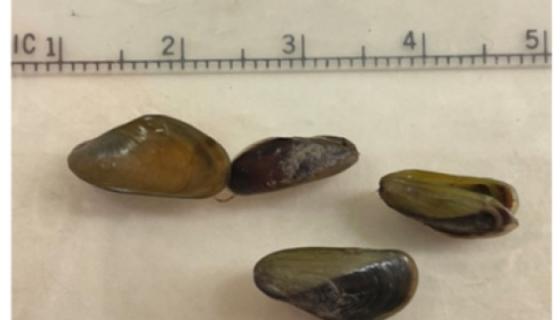
If you’ve never heard of a golden mussel, you’re not alone. They’re small, unassuming, and easy to miss—but don’t let that fool you. These freshwater hitchhikers have a reputation for spreading quickly and causing big problems wherever they land.
Golden mussels (scientific name Limnoperna fortunei) are an invasive species, meaning they don’t naturally belong in our waterways. Originally from Asia, they’ve already caused major impacts in parts of South America.
First detected in California in October 2024 (which was also the first known occurrence of golden mussel in North America), they are spreading quickly throughout the state and now there's growing concern about keeping them out of places like Mono County and the Eastern Sierra. If they reach our lakes and streams, they could permanently change them.
Unlike other invasive species, golden mussels can survive in a wide range of water conditions—including the cold, low-calcium waters found in the Eastern Sierra. That means our region is especially vulnerable.
Read more:
Wikipedia
USDA National Invasive Species Information Center
North American Invasive Species Management Association (NAISMA)
Why Should We Care?
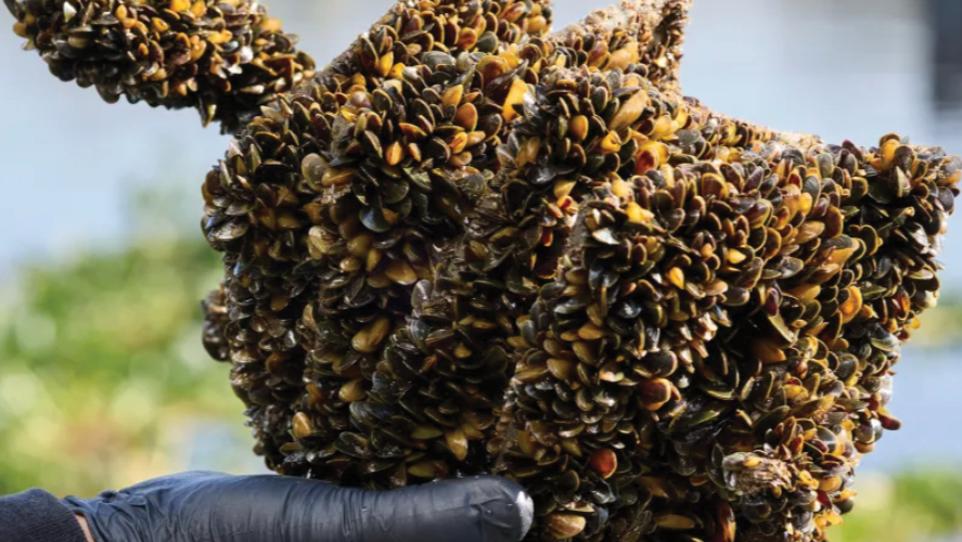
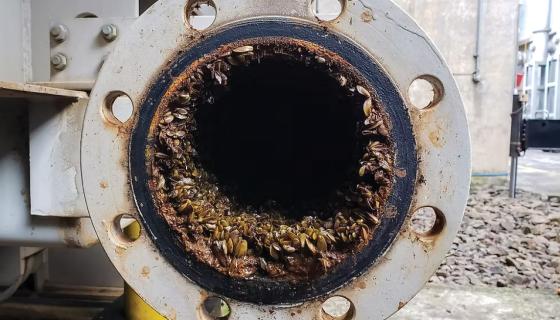
Golden mussels don’t just show up—they take over. Think of them less like a single shell and more like a living layer of concrete that spreads underwater.
They attach to almost anything: rocks, docks, boats, motors, pipes, and even aquatic plants. They reproduce quickly, forming dense colonies that are nearly impossible to remove once established.
If introduced here, they could:
- Damage fish habitat and reduce food sources for fish
- Impact recreational fishing and boating
- Clog water infrastructure like pipes, dams, and boat motors
- Increase maintenance costs for water and power systems
Once they’re here, there is no way to fully get rid of them. Prevention is the only option.
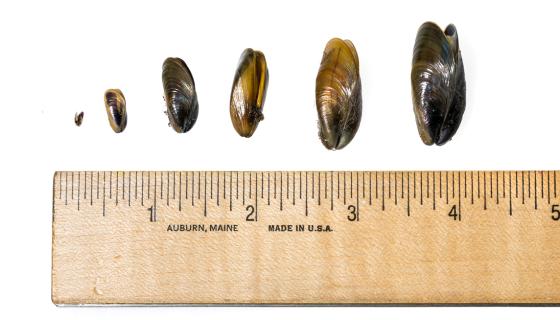
The Sneaky Part: You Can’t Always See Them
Golden mussels have a life stage called “veligers” — microscopic larvae that float in the water. At this stage, they’re invisible to the naked eye.
That means they can easily hitch a ride in:
-
A few drops of water in your boat
-
Wet gear like waders or life jackets
-
Live wells, bilges, or ballast tanks
-
Even with muddy equipment, water in bait containers, or aquatic plants that may be stuck in fishing line.
And to make matters worse, they can also survive outside of water for periods of time, meaning they can travel long distances on boats and equipment.
Because our lakes and rivers are connected, a single introduction could spread quickly throughout the entire region.
You might not see them—but they’re there, and they travel well.
What We’re Doing About It
New laws in 2026
To protect local waters, Mono and Inyo Counties have adopted new ordinances requiring watercraft inspections before launching.
What this means:
-
All trailered watercraft (boats, jet skis, etc.) must be inspected before launching
-
Boaters must stop at a Watercraft Inspection & Decontamination (WID) station
-
Once cleared, they will receive an Eastern Sierra Mussel Sticker
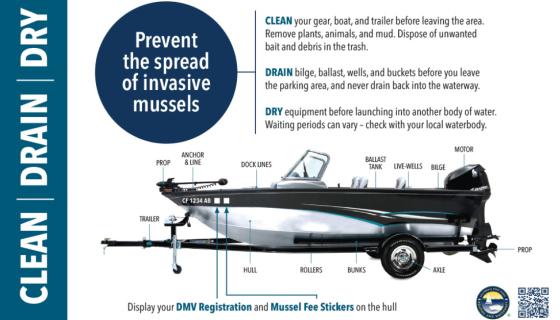
What You Can Do: Clean, Drain, Dry... and INSPECT
The good news? Prevention is simple—and incredibly effective.
Before leaving any body of water:
Clean
Remove all plants, mud, and debris from your boat and gear
Drain
Empty all water from bilges, ballast tanks, and live wells
Dry
Let everything dry completely before launching somewhere new
Now: In addition to Clean, Drain, Dry - Inspect
Self-inspect: Take a few extra minutes to do a thorough inspection of your boat and gear before leaving the water and again before launching somewhere new. Check hard-to-see areas like trailer bunks, axles, anchors, fishing gear, and anywhere water can hide. This also applies to Canoes, kayaks, car- top boats, float tubes, rafts, wind surfers/boards, boogey boards, nonmotorized paddle boats, and nonmotorized sail boats that are eight (8) feet or less in length.
Mandatory inspections: If you have a trailered watercraft, plan to stop at an inspection station. In the Eastern Sierra, inspections are required before launching, and they’re one of the most effective ways to prevent the spread of invasive species.
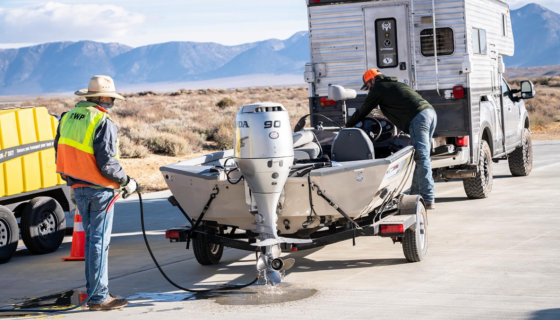
Inspections are quick and straightforward - and free! Visit EasternSierraWID.com for FAQs, WID station details, and everything you need to know before you launch
An inspector will:
- Ask where your boat has recently been used
- Check your boat and trailer for water, mud, or debris
If your boat is clean, drained, and dry, you’ll receive a sticker and be ready to launch. If not, you may be required to go through decontamination using high-temperature water to eliminate any risk.
And remember, even if you’re not towing a boat, you can still help prevent the spread of invasive species. Kayaks, paddleboards, float tubes, waders, and fishing gear can all carry water or organisms between lakes. Please clean, drain, dry and inspect - every time!
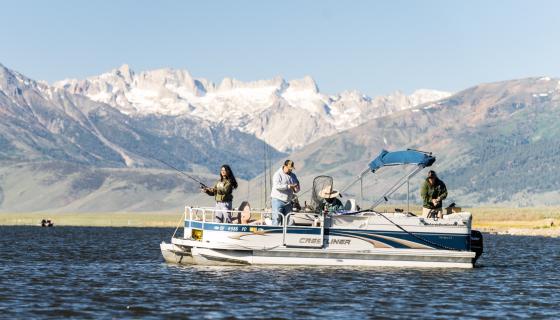
Protect What We Love
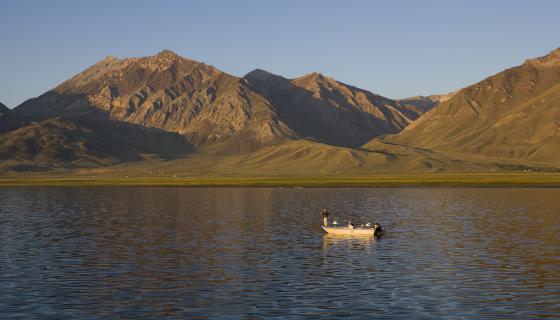
The Eastern Sierra’s lakes, rivers, and fisheries are part of what makes this place special.
With a little extra care now, we can protect them for years to come. Protecting the Eastern Sierra is a shared responsibility.
Before you launch:
- Stop at a WID station
- Get inspected
- Receive your sticker
And always:
- Clean, drain, and dry your gear
Thank you!

